
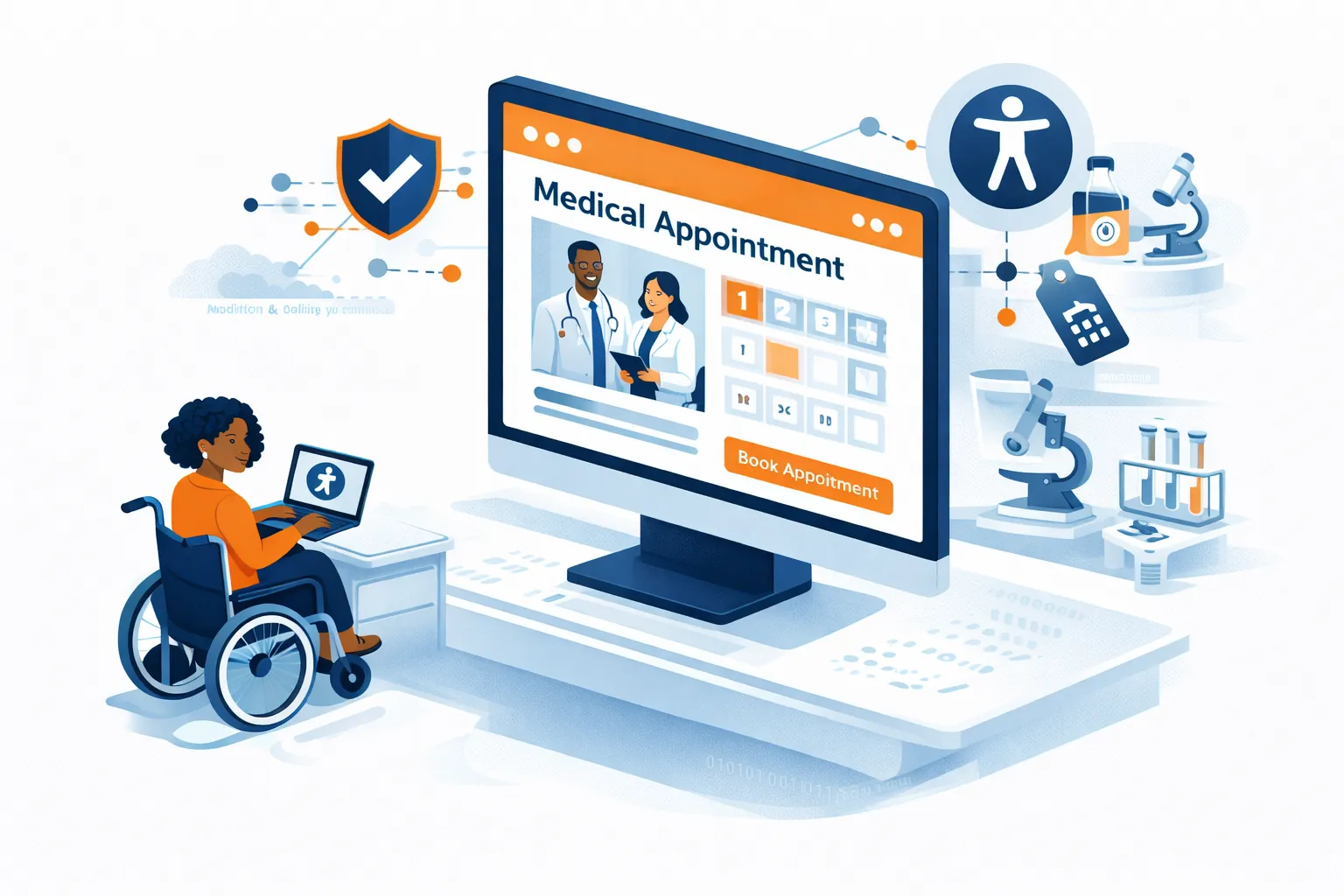
Title II compliance deadlines for local governments are closer than they look
The US Department of Justice set a clear timeline for when state and local governments have to make their websites and mobile apps accessible. For governments serving 50,000 people or more, the deadline is April 24, 2026. Smaller jurisdictions and most special districts have until April 26, 2027 .
That first deadline is about six weeks away as of this writing.
If you work for a county, city, school district, transit agency, public library, or court system, these rules apply to you. So do the deadlines .
What actually changed
Title II of the ADA has always required that government services be accessible to people with disabilities. That's not new. What's new is that the DOJ finally picked a specific technical standard. They chose the Web Content Accessibility Guidelines 2.1, Level AA .
Before this rule, governments had to make their websites accessible but there was debate about what that meant. Now there's a concrete benchmark. If your site meets WCAG 2.1 AA, you're compliant. If it doesn't, you're not.
The rule became effective June 24, 2024, but governments got staggered deadlines based on population size .
Who has to comply by when
The deadlines break down like this:
- April 24, 2026: State governments, counties, cities, and towns with population of 50,000 or more
- April 26, 2027: Governments with population under 50,000, plus all special district governments regardless of size
Special district governments include things like water districts, fire protection districts, transit authorities, and port authorities. The rule defines them as public entities that provide a limited number of functions and whose population isn't calculated by the Census Bureau .
If you're a police department or public library, your deadline follows your municipality's population. There's no separate timeline based on your department's budget or size .
What WCAG 2.1 AA actually requires
WCAG 2.1 AA has about 50 specific success criteria. They're organized around four principles: content must be perceivable, operable, understandable, and robust .
Here's what that looks like in practice.
Perceivable means users can recognize and use your content with whatever senses they have. So images need alternative text descriptions. Videos need captions. Color contrast between text and background needs to be at least 4.5:1 . If you use red text on a dark gray background, someone with low vision probably can't read it.
Operable means users can navigate your site even if they can't use a mouse. Everything needs to be reachable and usable with a keyboard alone. When someone tabs through your site, they need to be able to see where they are. That's called a focus indicator . If your dropdown menus disappear when someone tries to tab through them, you're not compliant.
Understandable means your site behaves consistently. Navigation should appear in the same place across pages. Error messages on forms should tell people what went wrong and how to fix it. Your page code should specify the language so screen readers pronounce words correctly .
Robust means your site works with assistive technologies. Screen readers, Braille displays, speech input software — they all need to be able to interpret your content. That means using proper HTML structure with things like <header>, <nav>, and <main> tags instead of just formatting text to look like a header .
The five exceptions, which are narrower than you might think
The DOJ included five categories of content that don't have to meet WCAG 2.1 AA. But these exceptions have strict limits .
Archived web content is exempt if it meets four conditions: it was created before your compliance date, it's kept only for reference or recordkeeping, it's not changed after archiving, and it's stored in a clearly labeled archive area . You can't just label everything "archive" and call it done. The DOJ explicitly said public entities may not circumvent their obligations by labeling content as archived .
Preexisting conventional electronic documents means PDFs, Word files, PowerPoints, and spreadsheets that were posted before your deadline. They're exempt unless they're currently used to apply for, access, or participate in your services .
That last part matters. If you have a 2022 permit application PDF on your site and people are still using it to apply for permits, it's not exempt. You need to make that PDF accessible or replace it with an accessible version .
The DOJ gave an example: if your site has old COVID-19 reports from 2020 that are just sitting there, those are exempt. But if you keep current water quality reports on the same page as old ones, the current reports need to be accessible .
Third-party content posted by people not acting on your behalf is exempt. That covers public comments on a message board or social media comments . But if you contract with a vendor to provide a service — like a parking payment app — that vendor's content is your responsibility .
Individualized password-protected documents like a specific person's water bill are exempt. But you still have to provide an accessible version if someone requests it .
Preexisting social media posts made before your deadline don't need to be retroactively fixed. Posts after your deadline do .
One county's approach to compliance
Sampson County, North Carolina, has about 63,000 residents, so they're on the April 2026 deadline . Anita Lane, the Register of Deeds, has been working with their land records vendor, Logan Systems, on a compliance plan.
They're doing a phased implementation. The vendor upgraded the database, implemented new public search software, and released a mobile-friendly website. The new site isn't fully compliant yet, but Logan Systems is confident they'll make the April deadline. They hired a third-party firm to independently review the code and certify compliance once the work is done .
What's notable is that Lane didn't treat this as just an IT project. She worked directly with their vendor, had vendor staff on site, and brought in outside certification. That's the kind of documentation that matters if compliance ever gets questioned.
What compliance costs
Montgomery County, Maryland, has been working on ADA compliance for physical facilities since 2006, when the DOJ included them in Project Civic Access, a proactive DOJ initiative to review jurisdictions . They signed a settlement agreement in 2011.
Their current budget for ADA compliance across facilities is $83.8 million total, with $28.8 million planned over the next six years . That covers building renovations, design work for pools and correctional facilities, and staff training.
Digital compliance will cost less than physical renovations for most governments, but it's not free. The cost depends on how big your site is, how many PDFs you have, and whether you rely on vendors.
The penalties for missing the deadline
The DOJ raised its maximum civil penalty for a first ADA violation to $75,000. Subsequent violations can go up to $150,000 .
States can add their own penalties. California's Unruh Civil Rights Act allows at least $4,000 per violation in private lawsuits, plus attorney's fees .
The bigger risk might be lawsuits. If your site is inaccessible, you can be sued, and you'll pay your own legal fees plus the plaintiff's if you lose. As one compliance officer put it during a Granicus webinar, penalties can be assessed per violation and actions can stack. "It's quite expensive to have this type of error come up" .
What's not required
Some things people worry about aren't actually required.
You don't have to meet WCAG 2.1 Level AAA, which is the highest standard. For example, one AAA criterion requires that text not require reading ability beyond lower secondary education. That's not required for Title II compliance .
You don't have to immediately remediate every PDF you've ever posted, as long as documents that are currently used for services get fixed .
You don't have to achieve perfect accessibility forever. The standard is compliance at the deadline and going forward. As Katie Jones from Granicus noted, there's no such thing as being "100% accessible" permanently because browsers and assistive technology keep changing .
What governments should do now
If you're on the April 2026 deadline, you should already be past planning and into remediation. If you're just starting, you need to move fast.
Start by assigning someone to own digital accessibility. That person needs authority to work across departments, because content lives everywhere .
Run an audit of your digital assets. That means your main website, any mobile apps, subsites for specific departments, and third-party portals you use for payments or permits . You're responsible for vendor platforms too .
Review your vendor contracts. If your payment portal isn't accessible, you need to know that now, not after the deadline. Some states are starting to require VPATs (Voluntary Product Accessibility Templates) from vendors .
Train the people who create content. If your staff doesn't know how to write alt text or format headings properly, you'll keep creating inaccessible content even after you fix the existing stuff .
Document everything. If you have to claim that full compliance would be an undue burden, you'll need to show your work. That defense exists but it's narrow and you should talk to a lawyer before relying on it .
The bottom line
The rule took effect in June 2024. The first deadline is April 24, 2026. If you're in a larger jurisdiction, that's roughly six weeks away. If you're smaller, you have about 13 months.
The DOJ picked a specific standard. They gave staggered deadlines. They included exceptions for old content. But they also made clear that governments can't just label things "archive" and move on.
Sampson County is working with their vendor and bringing in third-party certification. Montgomery County has been at this since 2006 and has budgeted tens of millions. Most governments will fall somewhere in between.
The requirement applies to everything you provide or make available, directly or through contracts . That's the part that catches people off guard. If your parking app is run by a private company, it still has to be accessible. If your online permit system is third-party software, same thing.
The deadlines are set. The standard is published. The only question now is whether your site will meet it.

Comments (0)
No comments yet.