
What the Law Says
The U.S. Department of Health and Human Services (HHS) recently updated Section 504 of the Rehabilitation Act. The rule is simple: if your organization receives federal health funding such as Medicare, Medicaid, or federal grants your digital services must be accessible. That includes websites, mobile apps, and patient portals. Fail to comply and you could face federal investigations, lawsuits, fines, or even the loss of federal funding.


The 2026 Healthcare Website Accessibility Rule and What it Means for Medical Practices
In May 2024, the U.S. Department of Health and Human Services published a final rule updating enforcement of Section 504 of the Rehabilitation Act of 1973. The rule runs more than 300 pages.
One section deals with digital accessibility.
For the first time, federal regulators spelled out what “accessible” means for healthcare websites, mobile apps, and patient portals used by providers that receive federal health funding.
The rule adopts the technical standard known as Web Content Accessibility Guidelines 2.1 Level AA.
The Deadlines are Staggered.

The rule applies to hospitals, clinics, and private medical practices that receive federal financial assistance through programs such as Medicare or Medicaid.
That includes websites, mobile apps, and patient portals.
Fail to comply and you could face:
- Federal Investigations
- Lawsuits
- Fines
- And Loss of Federal Funding.
For years, disability laws applied to healthcare websites through the Americans with Disabilities Act and Section 504.
But courts issued mixed rulings, and federal agencies rarely published technical guidance.
However the 2024 rule changed that.
It gave regulators a specific technical standard and a deadline.
Doctors who accept federal program payments now have to treat website accessibility as a compliance requirement.
Including Large Healthcare Providers!
- Organizations with 15 or more employees must comply by May 11, 2026.
- Organizations with fewer than 15 employees must comply by May 10, 2027.

Why the Federal Government Issued the Rule

Section 504 has been around since 1973.
It’s a simple rule: if you receive federal funding, you can’t discriminate against people with disabilities.
That includes organizations that rely on programs like Medicare, Medicaid, federal grants, or other government funding.
Hospitals, clinics, and healthcare providers have been subject to this rule for decades, long before the internet became the main place patients interact with healthcare services.
However now extends beyond buildings and services.
It applies to websites, mobile apps, and digital tools.
If your organization receives Medicare, Medicaid, federal grants, or other federal health funding, those systems must be accessible to people with disabilities.
Organizations that ignore this requirement risk federal investigations, lawsuits, financial penalties, and potentially losing access to federal funding.
Over the past Twenty Years Hospitals and Clinics Have Moved Patient Interaction Online.
✅ Appointment scheduling.
♿ Prescription refill requests.
🏷️ Insurance forms.
🔑 Patient portals.
However 98% of Websites Do Not Work with Screen Readers, Keyboard Navigation, or Assistive Technology
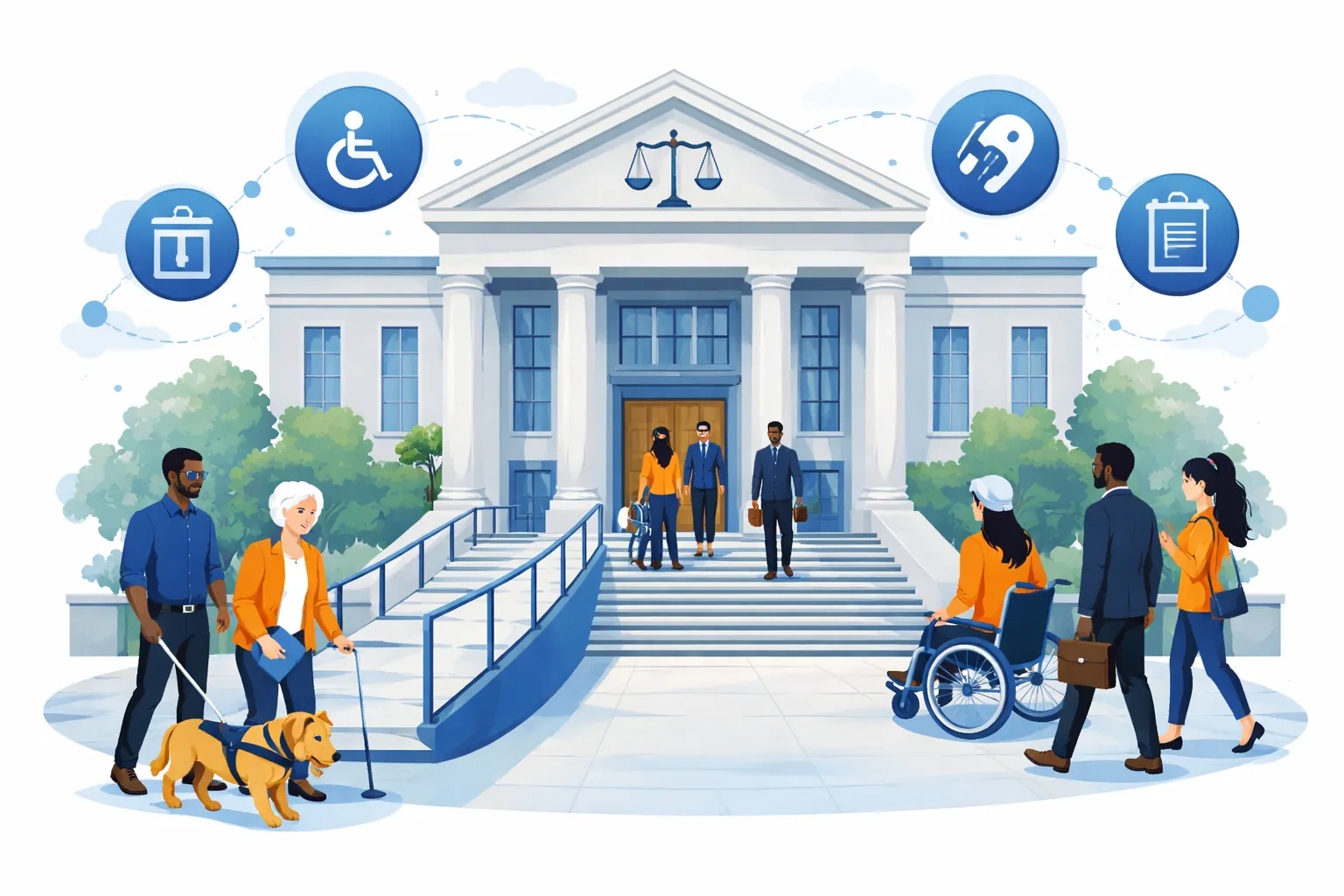
Complaints began reaching the U.S. Department of Health and Human Services (HHS) Office for Civil Rights, the agency responsible for enforcing Section 504 disability discrimination laws in healthcare.
Patients reported serious accessibility barriers.
Some could not schedule medical appointments because online booking systems required a mouse instead of keyboard navigation. Others could not read their lab results or medical records because hospitals posted them as scanned PDF images that screen readers cannot interpret.
These types of barriers effectively locked patients with disabilities out of essential healthcare services.
In response to these complaints, the HHS Office for Civil Rights proposed a rule in 2023 clarifying that websites, mobile apps, patient portals, and other digital services are covered under Section 504 nondiscrimination requirements.
The final rule was published in May 2024, making it clear that digital accessibility is now a core compliance requirement for healthcare organizations receiving federal funding.
The technical standard is straightforward.
Healthcare websites, mobile applications, and patient-facing digital tools must meet WCAG 2.1 Level AA accessibility standards.
These standards were developed by the World Wide Web Consortium (W3C), the international organization responsible for creating modern web technology standards.

What WCAG 2.1 Level AA Requires
WCAG 2.1 is not a single rule. It is a collection of success criteria covering different aspects of accessibility.
Level AA includes roughly 50 technical requirements.
Some are simple.
- Images must have text alternatives so screen readers can describe them.
- Text must meet minimum color contrast ratios so it remains readable for people with low vision.
- Navigation must work with a keyboard.
Others involve structural changes to how websites are built.
🔒 Forms must have labels that assistive technology can identify.
⚠️ Error messages must explain what went wrong when a form fails.
🖥️ Interactive components must expose their state to screen readers.
✅ Keyboard navigation must be operable via keyboard alone.
The Enforcement Mechanism

Yet 98% of Websites Fail These Tests!
- Appointment booking forms often use placeholder text instead of proper labels.
- PDF intake forms are scanned images that cannot be read by screen readers.
- Color contrast falls below WCAG thresholds in navigation menus.
None of these issues are complicated to fix from a development standpoint.
However they add up quickly on large sites.
The enforcement process comes through federal civil rights oversight.
When a healthcare provider receives federal funding, it agrees to follow Section 504 nondiscrimination rules. The Office for Civil Rights investigates complaints and conducts compliance reviews.
If a patient files an accessibility complaint about a website or portal, investigators may request documentation about the site and how it was built.
Typical outcomes involve a voluntary compliance agreement. The provider commits to fix accessibility issues within a specific timeline and may need to train staff on accessibility practices.
Funding termination exists as a legal option under Section 504, but it is rarely the first step. Agencies usually attempt negotiated resolution.
Still, the risk is real. Medicare and Medicaid reimbursement represent a large share of revenue for many healthcare providers.
When an Inaccessible Website Blocks a Patient
In 2022, a blind patient in New York filed a complaint after being unable to schedule a medical appointment online.
The patient relied on a screen reader, a type of assistive technology used by people who are blind or visually impaired to navigate websites.
The hospital’s appointment scheduling page used a calendar widget to select available dates.
There was one problem.
The calendar could only be operated with a mouse.
Because the widget did not support keyboard navigation, the patient could not select a date or complete the appointment request.
From the patient’s perspective, the hospital’s online booking system simply did not work.
The Accessibility Problem Was Small
The hospital eventually replaced the scheduling tool with a WCAG-compliant booking system.
Technically, the issue was not complex.
Developers later identified two common accessibility failures:
- Missing keyboard navigation controls
- Incorrect or missing ARIA markup for screen readers
These are routine problems in web development.
But when they appear on healthcare websites or patient portals, they can prevent patients with disabilities from accessing essential services.
Small Accessibility Errors Create Legal Risk
Most ADA and Section 504 website accessibility complaints do not involve catastrophic failures.
They involve small development mistakes.
- A button cannot be reached by keyboard.
- A PDF document is a scanned image instead of readable text.
- A form label is missing.
To a developer, these may look like minor oversights.
To someone using assistive technology, they can make an entire healthcare service inaccessible.
Why This Matters for Healthcare Providers
Healthcare organizations that receive Medicare, Medicaid, or federal grants must ensure their digital services meet WCAG 2.1 Level AA accessibility standards under the updated Section 504 rules enforced by the HHS Office for Civil Rights.
When websites, patient portals, or mobile apps fail to meet these standards, organizations may face:
Most of the time, the problem is something small that should have been fixed during development.
Federal civil rights complaints
Accessibility lawsuits
Regulatory investigations
Financial penalties
Risk to federal funding

Which Healthcare Organizations Are Covered
The rule applies to any healthcare entity receiving federal financial assistance from the Department of Health and Human Services.
That category is broad.
- Medicare payments count as federal financial assistance.
- Medicaid reimbursements count as federal financial assistance.
- Federal public health grants count as federal financial assistance.
The Rule Goes Beyond Hospitals.
Private Medical Practices that Accept Medicare or Medicaid.
Dental Clinics that Bill Medicaid.
Behavioral Health Providers that Receive Federal Grants.
Telehealth Companies Participating in Federal Health Programs.
Pharmacies Participating in Federal Health Programs
Medical Laboratories Receiving Federal Funding.
Hospitals Represent the Most Affected With Large Complex Health System Digital Ecosystems:
- Patient portals
- Mobile apps
- Billing systems
- Appointment scheduling platforms
- Telehealth services

Hospitals and Large Healthcare Systems
Each of these tools must comply with WCAG 2.1 AA if they are patient-facing.
Hospital portals present a recurring accessibility problem. Many are built on older enterprise software. Accessibility features vary depending on the vendor.
If a hospital relies on a third-party platform that fails accessibility tests, the hospital still remains responsible under Section 504.

Private Practice Websites Make up a Large Share of Healthcare Websites and Most Were Built Years Ago and Include:
Basic Information Pages
Contact Forms
Online Appointment Requests
Downloadable Patient Forms
Outpatient Clinics and Private Medical Practices
Accessibility issues often appear in those downloadable forms.
Intake paperwork is frequently provided as scanned PDFs.
Screen readers cannot interpret scanned images unless they undergo optical character recognition. Without that step, blind users cannot read or complete the forms.
For practices that accept Medicare patients, these documents fall under the digital accessibility rule.


Dental clinics appear frequently in accessibility lawsuits.
One reason is structural.
Many dental practices operate independently. They rely on small marketing websites that include appointment forms, insurance intake documents, and promotional pages.
Accessibility testing often finds missing form labels, improper heading structures, and low contrast color schemes.
Dental offices that accept Medicaid fall directly under the Section 504 rule. Pediatric dental clinics are particularly affected because many rely on Medicaid reimbursements.
Mental Health and Behavioral Health Providers
Behavioral health providers increasingly rely on online intake systems.
Therapy practices use digital questionnaires to gather patient history before the first appointment. Many also offer telehealth sessions through integrated platforms.
Accessibility barriers appear when intake questionnaires rely on dynamic forms that do not announce changes to screen readers.
Another issue involves video platforms without captioning support.
If the platform lacks accessible controls or captions, patients with hearing impairments may struggle to participate in therapy sessions.

Urgent Care Centers
Urgent care chains typically use centralized websites for multiple locations.
These sites include real-time wait time tools, online check-in systems, and digital patient registration forms.
Accessibility failures often occur in wait time widgets and map interfaces. Some rely on dynamic scripts that are not exposed to assistive technology.
Urgent care networks receiving Medicare or Medicaid reimbursements must evaluate these tools under WCAG standards.
Telehealth Companies
Telehealth expanded rapidly during the COVID-19 pandemic. Many platforms were built quickly to meet demand.
Some were not designed with accessibility in mind.
Common issues include:
- video players without keyboard controls
- missing captions
- screen reader conflicts in chat interfaces
The Section 504 rule treats telehealth services as digital healthcare programs. If the company receives federal funding or partners with federally funded providers, accessibility requirements apply.

Pharmacies and Prescription Services
Pharmacy websites often include prescription refill systems and medication management portals.
Accessibility failures here can create safety risks.
For example, if a refill system does not correctly label medication fields, a screen reader user may struggle to confirm which prescription they are ordering.
Pharmacies participating in federal programs such as Medicare Part D fall within the scope of the rule.
diagnostic laboratories and imaging centers
Laboratories and imaging centers provide patient portals for test results.
Accessibility problems sometimes appear in result reports delivered as scanned PDFs or complex tables without proper markup.
Screen readers depend on table structure to interpret medical data correctly.
Without semantic markup, the information becomes difficult to understand.


Types of Medical Doctors Affected
The rule applies to any physician practice receiving federal healthcare funding.
That includes most specialties.
Below are common physician categories whose websites and digital tools fall under the rule.
Family Medicine Physicians
Family medicine doctors provide primary care across all age groups.
Their websites often include online scheduling, vaccination records, and patient education materials.
Accessibility issues appear when educational materials are posted as untagged PDFs or when appointment systems rely on inaccessible third-party widgets.


Internal Medicine Physicians
Internal medicine doctors focus on adult healthcare.
Practices frequently provide patient portals where individuals can review lab results, medication lists, and chronic condition management plans.
These portals must work with screen readers and keyboard navigation.
Pediatricians
Pediatric practices interact heavily with parents through digital tools.
Common website features include:
immunization schedules
school physical forms
online appointment scheduling
Forms downloaded from pediatric websites are often scanned images rather than accessible documents.
That becomes a barrier for parents using assistive technology.


Cardiologists
Cardiology clinics manage patients with heart disease and other cardiovascular conditions.
Their digital systems may include remote monitoring dashboards or portals for reviewing cardiac test results.
Accessibility becomes particularly important when patients need to interpret medical data.
Complex charts without text descriptions can be difficult for screen reader users.
Dermatologists
Dermatology practices typically operate marketing-focused websites featuring treatment descriptions, photo galleries, and appointment booking tools.
Photo galleries often lack alternative text describing images.
While alt text cannot fully convey a medical photograph, it still provides context about the type of condition or procedure depicted.


Neurologists
Neurology practices treat conditions affecting the brain and nervous system.
Patients with neurological disorders may have motor impairments that make keyboard navigation essential.
Websites that rely on small clickable targets or mouse-only interactions create access barriers.
Psychiatrists
Psychiatry practices often provide telehealth appointments and digital intake questionnaires.
Accessibility problems frequently appear in long intake forms that rely on dynamic scripts or visual cues without screen reader support.

Obstetricians and Gynecologists
OB-GYN clinics manage pregnancy care and reproductive health services.
Websites commonly include patient education materials, prenatal care guides, and appointment scheduling tools.
Accessibility failures often involve downloadable pregnancy guides formatted as untagged PDFs.
Orthopedic clinics publish rehabilitation instructions, exercise diagrams, and post-surgical care guides online.
Visual diagrams without descriptive text can limit access for blind patients.
Accessible design usually requires pairing diagrams with text explanations.
ophthalmologists
Eye specialists serve many patients with visual impairments.
Ironically, ophthalmology websites sometimes fail accessibility checks due to low color contrast or image-heavy layouts.
Screen reader compatibility becomes especially relevant for these patients.
gastroenterologists
Digestive health clinics provide preparation instructions for procedures such as colonoscopies.
These instructions are often delivered through downloadable PDFs.
If those documents are scanned images, screen reader users cannot read them.
oncologists
Cancer treatment centers provide large volumes of educational material and appointment scheduling tools.
Patients may access treatment schedules, lab reports, and medication instructions through portals.
Accessibility failures can create confusion around treatment information.
other healthcare professionals covered
Physicians are not the only group affected.
The rule also reaches other healthcare providers receiving federal funding.
Physical therapists
Occupational therapists
Speech-language pathologists
Chiropractors
Optometrists
Audiologists
Nurse practitioner clinics
Physician assistant practices
Each of these providers may operate patient-facing websites and digital tools.
the technical work required to comply
Compliance usually involves several stages.
First comes an accessibility audit. Automated scanning tools detect common errors such as missing alt text and color contrast failures.
Manual testing follows. Testers navigate the website using a keyboard and screen reader to detect functional barriers.
Developers then repair the code.
Common fixes include:
adding form labels
improving heading structure
correcting color contrast
tagging PDFs
adding captions to videos
Accessibility testing repeats after repairs to verify that the changes solved the problem.
limitations and criticisms of the rule
Some healthcare organizations have raised practical concerns.
Small practices often rely on third-party software vendors for appointment systems or patient portals. If the vendor’s platform fails accessibility tests, the practice has limited control over the code.
Another criticism involves cost. Accessibility audits and remediation require technical work, especially for older websites built without accessibility in mind.
For large health systems with thousands of pages and complex portals, compliance projects can take months.
The rule does allow limited flexibility when content qualifies as archived or when compliance would fundamentally alter a service. But most patient-facing tools still need remediation.
accessibility lawsuits still exist alongside the rule
The Section 504 rule does not replace lawsuits under the Americans with Disabilities Act.
Private plaintiffs continue filing accessibility cases in federal court. Healthcare providers remain frequent targets because their websites often include interactive features such as appointment booking and payment systems.
In other words, the rule adds federal regulatory oversight without eliminating existing litigation risk.
what healthcare organizations are doing now
Since the rule was published in 2024, many healthcare providers have begun accessibility projects.
Large hospital systems often conduct system-wide audits of patient portals and mobile apps.
Smaller practices are reviewing appointment booking tools and online forms.
Some are replacing older website templates entirely.
Others are focusing on document accessibility, converting scanned PDFs into properly tagged documents.
The work is uneven across the industry. Some providers began remediation immediately after the rule was published. Others remain unaware of the deadline.
why healthcare websites create recurring accessibility problems
Healthcare sites contain features that are technically complex.
Appointment booking systems
Patient portals
Insurance verification forms
Telehealth interfaces
These features rely on dynamic scripts and third-party integrations.
Accessibility failures often occur in those integrations rather than in basic page content.
For example, a medical practice might have an accessible informational website but embed an external scheduling tool that fails WCAG tests.
From a legal standpoint, the practice still owns the accessibility responsibility.
the scale of the impact
The United States healthcare system includes hundreds of thousands of providers participating in Medicare and Medicaid.
According to federal program enrollment data, the Medicare provider registry alone includes more than one million healthcare professionals and facilities.
Most maintain some form of online presence.
Because the Section 504 rule applies to providers receiving federal financial assistance, a large portion of those sites now fall under WCAG accessibility requirements.
The change does not introduce new disability rights obligations. Those existed already.
What the rule did was define the technical standard and establish a timeline.
For healthcare providers relying on federal program payments, website accessibility is now tied directly to compliance with federal civil rights law.